
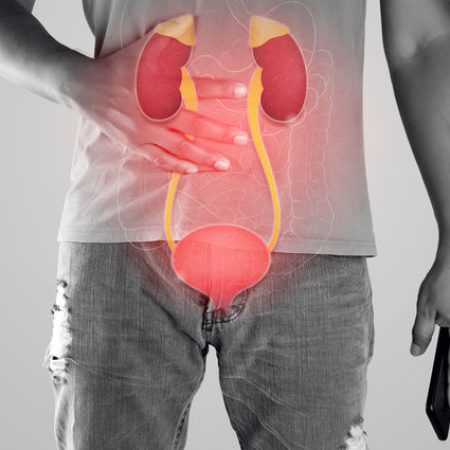
For patients with Upper Tract Urothelial Carcinoma (UTUC), treatment options are extremely limited—so much so that over 80% must undergo kidney removal due to a lack of effective therapies.
TU-1001 has the potential to change that. As the first non-invasive, non-surgical therapy for UTUC, it could offer a groundbreaking alternative to current treatments, which rely on repeated surgeries and invasive procedures. Without TU-1001, patients will continue to face high healthcare costs, increased risks, and a significant impact on their quality of life. Our goal is to provide a safer, more effective solution that preserves kidney function and improves patient outcomes.
SHARE:
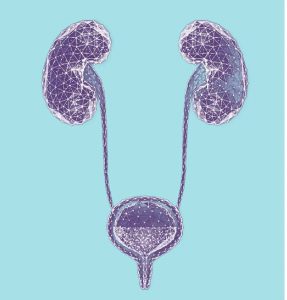
At Tu Therapeutics, we’re addressing a major challenge in cancer treatment: delivering medication effectively to the urinary tract despite natural barriers. Urothelial Carcinoma, a type of cancer that starts in the lining of the kidneys, ureters, and bladder, requires targeted treatment. Currently, chemotherapy must be delivered directly into the urinary tract through an invasive procedure after tumor removal surgery to be effective in the early stages. On the other hand, traditional chemotherapy that travels through the bloodstream only works once the cancer has spread beyond the kidney or bladder walls. Our goal is to bridge this gap and improve treatment options for patients.
Limitations of Current Treatments
Treating Urothelial Carcinoma—including upper tract urothelial carcinoma (UTUC) and non-muscle invasive bladder cancer (NMIBC)—often involves invasive surgeries and procedures that can be both expensive and physically demanding. Unfortunately, these treatments don’t always prevent the cancer from coming back, with bladder cancer recurrence rates reaching as high as 78% within five years.
Introducing UroPept™: A Breakthrough in Drug Delivery
Meet UroPept™—our innovative drug delivery system designed to make treatment safer, more effective, and less invasive. Using a special peptide-drug conjugate, UroPept™ efficiently delivers medication directly to the urinary tract through urine, overcoming natural barriers that have made treatment difficult in the past. The best part? It’s administered through a simple IV, avoiding the need for invasive procedures while keeping the treatment targeted and minimizing side effects.
Why UroPept™ is a Game-Changer
A Smarter Approach to Drug Delivery. Traditional chemotherapy drugs, like antibody-drug conjugates (ADCs), struggle to reach the urinary tract because they’re too large to pass through the kidney’s natural filtration system. This means they can only be used after urothelial carcinoma has already spread beyond the kidney or bladder walls—something that happens in just 12% of cases at diagnosis.
UroPept™, on the other hand, is designed for fast and targeted drug delivery. Thanks to its small size, it clears through the kidneys efficiently, with over 80% reaching the urinary tract within just one hour of IV administration. This ensures precise treatment where it’s needed, while reducing side effects on other organs.
Reducing Bladder Cancer Recurrence. One of the biggest challenges in treating upper tract urothelial carcinoma (UTUC) is bladder recurrence, often caused by cancer cells spreading during procedures.
Our lead drug candidate, TU-1001, a UroPept™-based chemotherapy, is designed to treat the entire urinary tract—from kidney to ureter to bladder—helping prevent recurrence and improve patient outcomes. TU-1001 has already shown significant tumor reduction and survival benefits in preclinical studies, potentially transforming the way we treat urothelial carcinoma and other kidney and urinary tract diseases, improving patient outcomes and quality of life.
Our next big step is completing key non-clinical studies needed to submit our investigational new drug (IND) application to the FDA. Our goal is to gather the necessary data for a successful pre-IND meeting, bringing us closer to advancing TU-1001 toward clinical trials and, ultimately, to the patients who need it.
Funds from this campaign, combined with other funding sources, will support critical preclinical development activities for TU-1001 including:
Total: $1,000,000
So far, we’ve raised over $1 million from angel investors, helping us reach key milestones in our research. A portion of this funding has supported critical studies on how our treatment works, its safety, and stability.
We’ve also teamed up with PharmaDirections, Inc., an experienced partner that helps biotech startups bring innovative treatments to market. Additionally, we’re collaborating with Dr. Douglass Scherr’s Urologic Oncology Research Laboratories at Weill Cornell Medical College to conduct important studies on how our drug distributes in the body using tumor-bearing mice. These partnerships are helping us move closer to bringing UroPept™ to patients in need.
Through the rest of 2025, Tu intends to raise additional funds from angel investors, grants and institutions to complete our non-clinical studies.
For far too long, patients with Upper Tract Urothelial Carcinoma (UTUC) have faced a difficult reality: over 80% must undergo kidney removal because there are no effective treatment options. This not only leads to life-changing complications but also limits their quality of life.
TU-1001 has the potential to change the future of UTUC treatment. As the first non-invasive, non-surgical therapy, it offers new hope—one that could eliminate the need for repeated surgeries and invasive procedures. Without TU-1001, patients will continue to endure painful, costly treatments with no better alternative. We’re committed to transforming care, preserving kidney function, and giving patients the quality of life they deserve.
Therapeutics Pitch Session 2025: Tu Therapeutics Inc
Co-founder and Director
Michael Choo has over 25 years of experience in investing in companies. He is a principal of FRC Advisors LLC, a private investment firm. Prior to founding FRC Advisors, he was with Frontier Ridge Capital, Atticus Capital, W.L. Ross & Co. and Goldman Sachs & Co. In addition to his professional responsibilities, Mr. Choo previously served on the Stanford University Board of Trustees, where he was a member of the Medical Center Committee, providing oversight over Stanford University’s School of Medicine, Stanford Hospital, and the Lucile Packard Children’s Hospital. Additionally, he was a member of the Freeman Spogli Institute for International Studies Advisory Board. Mr. Choo holds a Bachelor of Arts from Stanford University and a Master in Business Administration from Harvard Business School.
Co-founder and Chief Medical Officer
Dr. Benjamin B. Choi is a Clinical Assistant Professor in Urology at the Weill Medical College of Cornell University and an Attending Urologist at New York Presbyterian Hospital Weill Cornell Medical Center. He received his M.D. with Distinction in Research from the University of Rochester and completed his residency in Urology at New York Presbyterian Hospital-Weill Cornell Medical Center and at the Memorial Sloan-Kettering Cancer Center. Dr. Choi’s recent research interests have focused on bladder cancer, stemming from his experiences as a urological surgeon. He spearheaded a collaboration with scientists at Weill Cornell Medical School resulting in the creation of a novel urinary system-directed peptide that when conjugated with cytotoxic drugs significantly inhibited tumor growth in an orthotopic mouse model of NMIBC, avoiding systemic toxicity. This work was recently published in the Journal of Cancer Research. Dr. Choi is a co-inventor on patent US-11571481-B2 “Peptide-Linked Drug Delivery System”.
Chief Scientific Officer
Dr. Gerritsen has over 30 years of experience in the biotechnology/pharmaceutical industry. She obtained her Ph.D. in Pharmacology at the University of Calgary. Her post-graduate work was performed in the Department of Pharmacology at the University of California, San Diego. She joined the faculty of New York Medical College and established a world class laboratory in endothelial biology. She later joined Bayer Pharmaceuticals as a group leader in inflammation and immunology research. Following a sabbatical at the Brigham and Women’s Hospital (Harvard), she joined Genentech, setting up a leading laboratory in angiogenesis research. She led research teams in the development of pro- and antiangiogenesis peptides, proteins, and antibodies. Several years later she joined Millennium Pharmaceuticals, heading up the vascular biology development and leading research teams in target discovery and validation, as well as pulmonary and renal fibrosis drug development projects. She then joined Exelixis as the Senior Director of Molecular Pharmacology, leading a large department (>80 people) where she was responsible for target identification, target validation, early high throughput screening assay development, cell-based assays for phenotypic and mechanistic readouts, pharmacodynamic assays, and biomarker identification and assay development for early clinical development. She led or supervised teams that put over 15 small molecules into clinical development, primarily in oncology indications. More recently, as an independent consultant, she has worked with multiple startups and small companies on various research projects in multiple indications. Several of the projects have resulted in successful IND filings and first in human studies.
$5000 donated by Tony and Susan Gilroy
May 15th, 2026 at 04:11 pm
$7500 donated by Mr. Murray Stark
May 15th, 2026 at 03:54 pm
$15000 donated by Anonymous
Dec 29th, 2025 at 10:19 am
$5000 donated by Anonymous
Sep 15th, 2025 at 12:41 pm
$5000 donated by Carol Siegel
Jul 30th, 2025 at 01:57 pm
$2500 donated by Richard Roth
Jul 9th, 2025 at 01:56 pm
$50000 donated by Anonymous
May 15th, 2025 at 08:43 am
$50000 donated by Anonymous
Apr 14th, 2025 at 11:24 pm