

OncuraDx is developing HPVeraScreen, a next-generation HPV test that goes beyond detecting infections to identify early genetic changes that signal cancer risk. Current tests can’t always distinguish harmless infections from those that may become dangerous, leading to unnecessary procedures for some women and delayed detection for others. Your support helps fund clinical studies to validate this platform, ensuring it accurately detects early warning signs and enables smarter, personalized care. Contributions directly advance this life-saving innovation, bringing better prevention, earlier detection, and improved outcomes to women at risk. Join us in making a tangible impact on cancer prevention today.
SHARE:
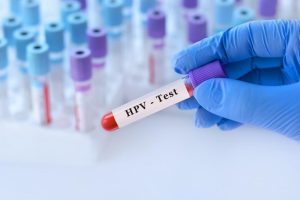
Most HPV infections, even from high-risk strains, never lead to cancer. Current tests can’t always tell the difference between infections that will go away on their own and those that could become dangerous. This means many women receive unnecessary treatments, while others with early warning signs may not be identified soon enough. OncuraDX is changing that. Our test can detect all known types of HPV and pinpoint the genetic changes that signal early cancer risk, allowing doctors and patients to make smarter, more personalized decisions and intervene earlier when it matters most.
We are raising funds to support clinical studies that will validate our HPV screening platform, focusing on early cervical changes that could lead to cancer. These studies, conducted at Rutgers University, will test real patient samples, including Pap smears and biopsy tissue, to ensure our platform accurately detects early warning signs. Where possible, we will compare matched samples to better understand the molecular changes driving disease. The research will also compare our test to current standard HPV screenings, demonstrating its potential to improve early detection and enable more personalized care for women.
OncuraDx is developing HPVeraScreen, a next-generation HPV test that goes beyond simply detecting high-risk HPV infections. Unlike current tests, HPVeraScreen combines viral typing with molecular signs of early cancer development, helping doctors identify women who truly need intervention while sparing millions from unnecessary biopsies and follow-up procedures.
Every contribution helps advance the science and bring this potentially life-saving diagnostic to the people who need it most. Funds will support:
1. Scientific Development ($360,000 / 72%) – Lab work to rigorously test and validate HPVeraScreen in patient samples, including:
Sample Collection & Annotation ($120,000): ~300 archived specimens from partner hospitals, reviewed and graded for comparison.
Lab Testing & Reagents ($160,000): DNA extraction, sequencing, and molecular assays to detect rare HPV types and cancer-related genetic changes.
Comparative Testing ($40,000): Benchmarking against current FDA-approved HPV tests to ensure accuracy.
Data Analysis ($40,000): Advanced computational work to interpret results and measure performance.
2. Regulatory & Expert Support ($100,000 / 20%) – Guidance to ensure HPVeraScreen can become a viable diagnostic:
Consulting ($80,000): Advisors for regulatory strategy, FDA planning, and trial design.
Documentation ($20,000): Validation summaries and regulatory materials.
3. Scientific Meetings & Market Discovery ($20,000 / 4%) – Present findings, engage collaborators, and track market trends.
4. Contingency & Operations ($20,000 / 4%) – Buffer for unforeseen lab or operational needs.
To advance and validate our HPV screening platform, OncuraDx combines internal expertise, strategic partnerships, and institutional support:
Funding sources: The project is supported by competitive foundation grants, federal funding, and ongoing efforts to secure seed investment and commercialization-focused grants.
Strategic partnerships: We collaborate with clinical centers to access cervical samples, including matched Pap smears and biopsies, allowing us to test and refine our platform with expert clinical guidance.
Experienced team and advisors: OncuraDx is led by co-founders Cristina Montagna, Ph.D., a molecular cancer expert; Shawn Fessler, Ph.D., with nearly 20 years in oncology biotech; and Laura Santambrogio, M.D., Ph.D., an immunology and cancer researcher. Our team also benefits from mentorship, industry advisors, and Rutgers University resources, ensuring strong scientific and commercial guidance.
Infrastructure: We have access to CLIA-certified labs, secure data pipelines, and institutional support for clinical study management, biobanking, and regulatory compliance.
Together, these resources position OncuraDx to successfully validate its HPV screening platform and move toward regulatory approval and broader patient impact.
If our technology stalls before it reaches patients, an important opportunity to improve cancer prevention and early detection would be lost. Current HPV tests cannot always tell which infections are truly risky, leading many women to undergo unnecessary, invasive procedures like colposcopy, while some high-risk cases go undetected until disease progresses. Our platform identifies early molecular changes that signal potential for cancer, enabling earlier detection, more precise triage, and fewer unnecessary interventions. Beyond cervical cancer, this technology could also improve screening for other HPV-related cancers and virus-driven malignancies. With continued support, OncuraDx can help shift the standard of care toward earlier, more personalized, and more effective cancer prevention—ensuring that this innovation reaches the patients and communities who need it most.
Co-founder and Chief Scientific Officer
Dr. Cristina Montagna is a cancer geneticist and internationally recognized expert in viral oncogenesis, genomic instability, and HPV-driven carcinogenesis. She has over 20 years of experience combining cytogenetics, single-cell genomics, and molecular oncology to understand how HPV reshapes the cancer genome. Dr. Montagna is a Professor of Radiation Oncology and co-leader of the Genomic Instability Research Program at Rutgers Cancer Institute. She trained under Nobel Laureate Renato Dulbecco, who earned the 1975 Nobel Prize for demonstrating that tumor viruses integrate their DNA into the host genome, a discovery that laid the foundation for modern understanding of viral oncogenesis. She later continued her training at the National Cancer Institute, where she mastered advanced cytogenetic methods foundational to her own discoveries. Dr. Montagna’s laboratory developed the foundational technology behind HPVerascreen™. She has led landmark studies in viral oncology and cancer genomics, advancing methods to detect and characterize molecular features associated with HPV-driven disease. Supported by NCI’s IMAT program, her lab also created VirusIntegrationFinder, a computational tool applied to more than 30,000 human samples across cancer research. Her expertise in HPV biology, genomic instability, and diagnostic innovation anchors the scientific direction of OncuraDx. Her expertise in HPV biology, structural genomics, and diagnostic assay development forms the scientific foundation of OncuraDx.
Co-founder and Head of Research and Development
Dr. Laura Santambrogio is a physician-scientist and leading expert in antigen processing, dendritic cell biology, and host immune responses to cancer. She earned her medical degree from the University of Perugia School of Medicine and her Ph.D. in Immunology from the University of Padua. She currently serves as Associate Director of Precision Immunology at the Englander Institute for Precision Medicine and Professor of Physiology, Biophysics, and Radiation Oncology at Weill Cornell Medicine. Her laboratory investigates antigen presentation, peptide-MHC interactions, and tolerogenic immune mechanisms using an integrated approach that spans biochemistry, biophysics, and cell biology. Dr. Santambrogio has published extensively in cancer immunology and has more recently applied her expertise to molecular events driving HPV-associated cancers, including early detection and biomarker discovery. She reviews for more than 20 scientific journals and serves on multiple NIH and non-NIH study sections. Over her career, she has trained more than 50 Ph.D. students and postdoctoral fellows, many of whom now lead their own academic and clinical research programs. Her deep expertise in immunology and disease pathogenesis strengthens the translational development of HPVerascreen™ and guides its integration into clinical workflows.
Co-founder and Chief Strategy and Development Officer
Dr. Shawn Fessler is a biotechnology leader with nearly two decades of experience translating scientific discoveries into therapeutic and diagnostic innovations. He completed his Ph.D. in Virology at Columbia University and postdoctoral training in inflammation, immunology, and oncology at the Albert Einstein College of Medicine and Tufts University School of Medicine. Across 19 years in biotechnology, Dr. Fessler has served as an in vitro pharmacologist, project team lead, and R&D program leader, contributing to programs in oncology, immunology, hematology, and metabolic disease. He is an accomplished builder and director of discovery and translational teams. At Mersana Therapeutics, he led programs culminating in two clinical-stage antibody-drug conjugates: XMT-1592 for ovarian cancer and XMT-1660 (Emiltatug ledadotin) for breast and gynecologic cancers. Dr. Fessler has deep experience in early-stage company strategy, using scientific and clinical evidence to prioritize programs, define development milestones, and shape corporate portfolios. His multidisciplinary background in virology, oncogenesis, and translational research directly supports OncuraDx’s mission to bring precision molecular diagnostics, such as HPVerascreen™, into clinical practice.