Americans are often told that public trust in science is declining. Surveys show confidence has slipped since its pandemic peak, and debates rage about misinformation, politics, and transparency. But there is a deeper, less visible crisis—one that doesn’t begin with public skepticism. It begins when science itself fails to reach the public.
Every year, scientists discover breakthrough technologies that could transform how we treat cancer. New cell therapies that train the immune system to kill tumors. Gene therapies designed to correct disease at its source. Nanotechnologies engineered to penetrate cancers that resist every existing drug.
And yet, most of these breakthroughs never reach a single patient.
They disappear into what researchers call the “Valley of Death”—the funding gap between early discovery and human clinical trials.
This silent attrition has consequences far beyond the laboratory. It shapes how the public experiences science itself. Because for most people, science isn’t defined by what is published in journals. It is defined by what changes their lives.
When promising cures stall for financial—not scientific—reasons, the public doesn’t see progress. They see delay. They see a system that promises hope but delivers incremental change. And over time, they begin to lose confidence—not necessarily in science as an idea, but in science as a system that works for them.
The uncomfortable truth is that our innovation ecosystem is structurally misaligned with the biology it is meant to serve.
Biology is complex. Breakthrough therapies often take years of refinement before they are ready for human testing. But funding systems—particularly venture capital—are optimized for speed, predictability, and scale. Investors must prioritize financial return timelines. As a result, many scientifically sound therapies are abandoned simply because they are too early, too complex, or too uncertain to fit conventional investment models.
This is especially true in cancer, where the hardest-to-treat diseases—pancreatic cancer, brain cancer, rare pediatric cancers—are also the least likely to attract early funding.
The result is a paradox: we are living in a golden age of scientific discovery, but a bottleneck age of scientific translation.
This disconnect doesn’t just slow innovation. It erodes trust.
Because trust is not built solely on evidence. Trust is built on outcomes.
Patients trust science when therapies save lives. Families trust science when breakthroughs reach the bedside. Communities trust science when they see progress against the diseases that affect them most.
When innovation stalls, trust stalls with it.
But there is another way forward—one that reconnects the public directly to the progress of science itself.
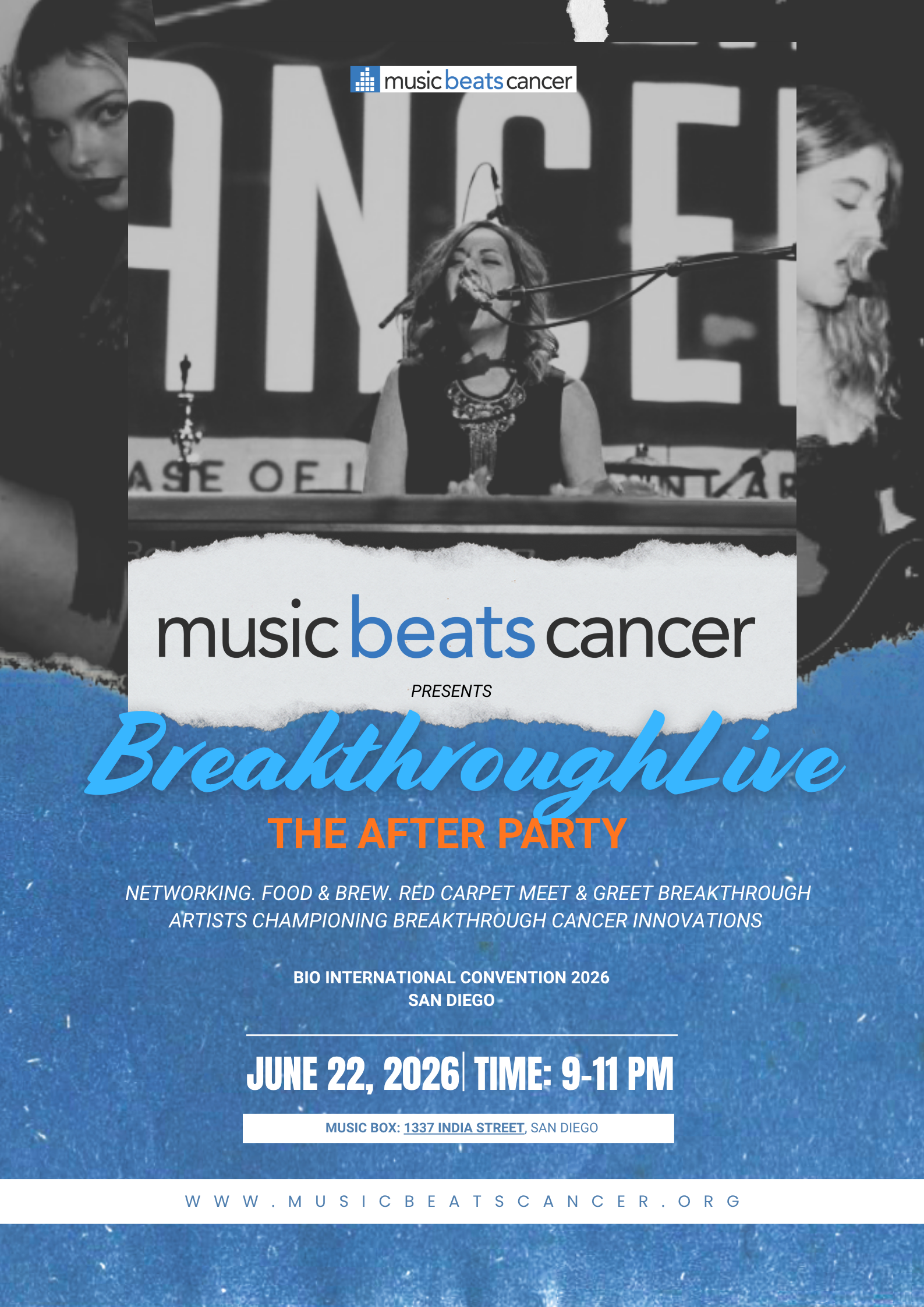
Organizations like Music Beats Cancer are pioneering a new model that allows the public to support breakthrough cancer technologies at their most vulnerable stage. By combining culture, storytelling, and philanthropy, they enable individuals to help bridge the Valley of Death—providing early, non-dilutive funding to therapies that might otherwise disappear.
This model does something traditional funding cannot. It transforms the public from passive observers of science into active participants in its progress.
And in doing so, it rebuilds trust—not through persuasion, but through participation.
When people can see, understand, and support the journey of a breakthrough therapy—from lab bench to clinical trial—they gain a tangible connection to science. They see where their support goes. They see what it enables. They see the obstacles scientists face, and the courage required to overcome them.
Science stops being abstract. It becomes human.
This matters now more than ever. Because the next generation of cancer cures is already being invented. The question is not whether the science exists. The question is whether the system will allow it to survive long enough to succeed.
If we want to restore public trust in science, we must do more than defend science. We must deliver it.
That means building bridges across the Valley of Death. It means creating funding models that value long-term impact alongside short-term return. And it means empowering the public to play a role in advancing the breakthroughs that may one day save their lives.
Trust in science does not come from what science promises.
It comes from what science makes possible.